
Protests against the use of The Bell Hotel in Epping, Essex, as accommodation for asylum seekers have persisted for months, escalating into violent clashes with police and prompting local authorities to consider drastic safety measures. Recent emails obtained by the BBC show that Epping Forest District Council weighed the possibility of evacuating nearby homes amid concerns that public disorder was spiralling out of control. The revelations highlight deep community tensions over national immigration policy and the placement of asylum seekers in local hotels.
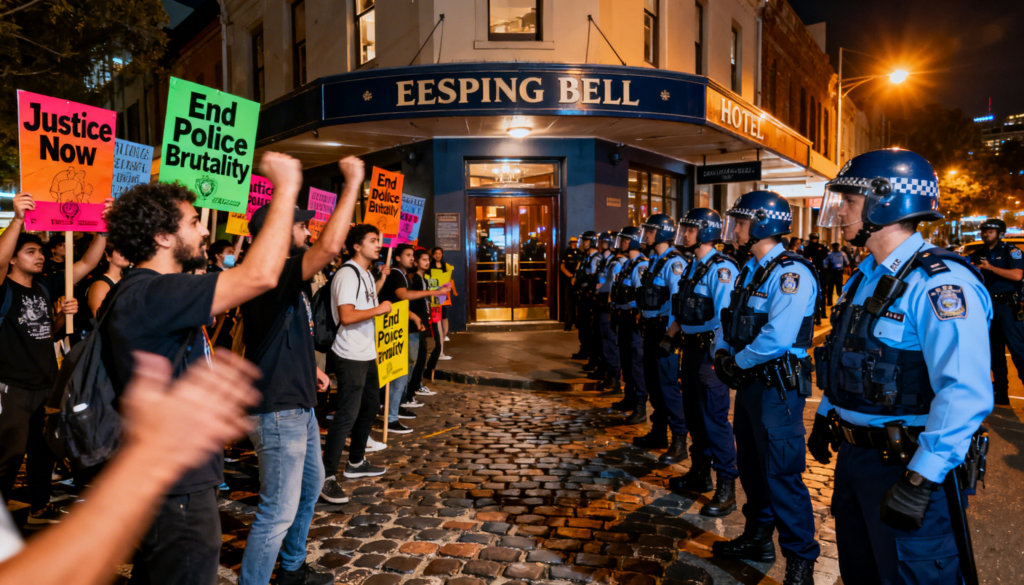
The Bell Hotel, a former public house and hotel on the High Road in Bell Common, Epping, has housed asylum seekers intermittently for several years under arrangements with the Home Office. However, demonstrations intensified dramatically in July 2025 following the arrest of an asylum seeker living at the premises. The incident triggered a wave of protests that drew thousands of participants and, at times, counter-demonstrations, transforming the quiet Essex town into a national flashpoint.
Background: Months of Demonstrations Triggered by Local Incident
Demonstrations outside The Bell Hotel began on 13 July 2025, shortly after Hadush Kebatu, an Ethiopian national residing at the hotel, was arrested on suspicion of sexual offences. Kebatu was later convicted and jailed in September 2025 for two sexual assaults—one against a 14-year-old girl and another against a woman—along with related charges including harassment and incitement.
Local residents expressed concerns about the safety of children and the suitability of the hotel’s location, situated near schools and residential areas. Protests continued throughout July and August 2025, with large gatherings reported on multiple dates, including 17, 20, 23, and 27 July. Organisers and participants, often displaying St George’s flags and banners reading “Protect our kids,” argued that the use of the hotel for asylum accommodation strained local resources and posed risks to the community.
Counter-protests by groups supporting refugee rights, including Stand Up to Racism, also took place, leading to heightened police presence to keep rival demonstrations apart. Essex Police described the majority of protests as peaceful but noted that some escalated into disorder. By late summer 2025, more than 2,000 people had attended demonstrations across the various dates, according to local authority statements.
Escalation: Violent Clashes with Police and Public Disorder
While many gatherings remained orderly, several protests turned violent, resulting in injuries to officers and damage to police vehicles. On 17 July 2025, fireworks were launched, eggs were thrown at police and the hotel, and projectiles struck officers. Video footage showed crowds surrounding police lines, with some individuals using or threatening unlawful violence.
Essex Police reported eight officers injured in one incident alone, with others assaulted or targeted by lasers in later protests. Arrests followed, including for violent disorder and criminal damage. In recent developments reported by the BBC, two men—Shaun Thompson, 38, and Luke Fleming, 21—admitted violent disorder related to the 17 July protest at Chelmsford Crown Court. Other individuals have been jailed or received suspended sentences for assaults on emergency workers.
The scale of the unrest prompted significant police resources, with riot gear deployed on occasion and large cordons established to protect both the hotel and surrounding properties. Local reports indicated that the demonstrations imposed substantial costs on taxpayers and disrupted community events.
Council Emails Reveal Fears of Spiralling Disorder and Evacuation Plans
Behind the scenes, Epping Forest District Council expressed grave concerns about the situation’s trajectory. Emails obtained by the BBC, sent between councillors and senior staff in July 2025, reveal that chief executive Andrew Small urged the Home Office to announce the hotel’s closure publicly. In one message dated 16 July, Small wrote: “I am now being asked to consider evacuations of neighbouring residents, needing to consider the safety of my staff and needing to cancel long-standing events on the grounds of public safety.”
The council feared that escalating protests could endanger residents living near The Bell Hotel, which at the time accommodated approximately 138 asylum seekers. Officials highlighted the hotel’s proximity to vulnerable sites and the potential for further disorder if tensions were not addressed swiftly. The emails underscore the pressure on local authorities caught between national asylum accommodation policies and community backlash.
Legal Battle: Injunction, Court Ruling, and Ongoing Use of the Hotel
In response to the protests and planning concerns, Epping Forest District Council launched legal action against the hotel’s owner, Somani Hotels Limited. The council argued that using the premises for asylum accommodation constituted a change of use without planning permission and exacerbated local tensions. A High Court interim injunction was granted in August 2025, ordering the relocation of asylum seekers by mid-September.
However, the Home Office and hotel owners successfully appealed. In November 2025, the High Court ruled that asylum seekers could remain, determining that the council’s case did not sufficiently outweigh government obligations. A further attempt by the council to appeal was rejected in March 2026, confirming that the hotel’s use for asylum housing would continue.
The judgment emphasised that the court was not adjudicating government immigration policy but focused on planning and public safety considerations. Asylum seekers have remained at the hotel since the ruling, though the intensity of protests has subsided in recent months.
Current Developments and Broader Implications for Epping
As of March 2026, The Bell Hotel continues to house asylum seekers, with sporadic smaller demonstrations reported, including an incident in January 2026 involving a laser pointed at a police officer. Recent court proceedings related to the July 2025 protests indicate that accountability measures remain ongoing.
The events in Epping reflect wider national debates over asylum accommodation in hotels, which currently house thousands across the UK. Local residents remain divided: some view the protests as a legitimate expression of community safety concerns, while others describe them as a stain on the town’s reputation. Epping Forest District Council has continued to advocate for alternative solutions with the Home Office, citing sustained pressure on local services.
The revelations from the council emails serve as a stark reminder of the human and operational costs of prolonged unrest. As authorities and residents navigate the aftermath, the situation at The Bell Hotel underscores the challenges of balancing national policy with local realities in Essex and beyond.
